
Robotics and Physical AI: 2026 Marks the Inflection Point
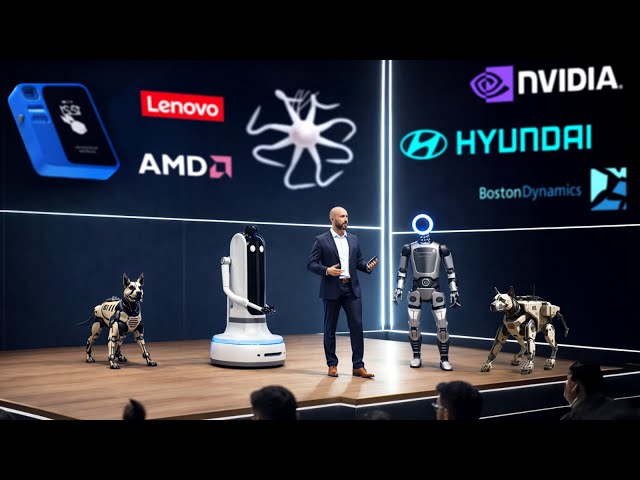
After years of incremental progress and unfulfilled promises, robotics and physical AI are reaching a critical inflection point in 2026. The convergence of decreasing hardware costs, mature AI capabilities, and proven applications is transforming robots from expensive experiments into practical, deployable systems.
The Perfect Storm of Enabling Technologies
Three trends are converging to make 2026 robotics’ breakthrough year:
Falling Hardware Costs: Sensors, batteries, actuators, and compute modules that once cost thousands now cost hundreds or less. This democratization of robotics components makes previously uneconomical applications viable.
AI Maturation: Large language models, computer vision systems, and reinforcement learning algorithms have reached sophistication levels enabling robots to navigate complex, unstructured environments. Where early robots required perfectly controlled spaces, modern systems handle real-world variability.
Proven Use Cases: Early adopters in warehouses, hospitals, and industrial facilities have demonstrated clear ROI, creating confidence for broader deployment. Robotics is moving from experimental technology to established category with measurable business value.
Warehouse Robotics Leads Commercial Deployment
Amazon, DHL, and other logistics giants have deployed thousands of robots in fulfillment centers, demonstrating that automation can scale profitably. These systems move inventory, sort packages, and increasingly collaborate with human workers in hybrid workflows.
The business case is compelling. Robots work 24/7 without breaks, maintain consistent quality, and reduce workplace injuries in physically demanding environments. While initial capital investment is substantial, operational savings accumulate over multi-year deployments.
Critically, modern warehouse robots leverage AI for path planning, obstacle avoidance, and task prioritization. They’re not following pre-programmed routes—they’re making real-time decisions based on dynamic warehouse conditions.
Zipline’s $600M Round Validates Drone Delivery
California-based drone delivery startup Zipline secured $600 million at a $7.6 billion valuation from Fidelity Management, Baillie Gifford, Valor Equity Partners, and Tiger Global. The funding will accelerate U.S. expansion into Houston, Phoenix, and other markets.
Zipline’s integrated platform—combining drones, logistics software, and ground systems—already operates in Africa, Japan, and parts of the U.S. The company’s deliveries doubled from 1 million to over 2 million in the past year, demonstrating scalable demand for autonomous logistics.
The investment thesis is straightforward: as autonomous delivery becomes cost-competitive with traditional logistics, first-movers with proven technology capture outsized market share. Zipline’s operational track record distinguishes it from purely aspirational drone startups.
Humanoid Robots Generate Hype But Remain Impractical
While humanoid robots generated significant attention at CES 2026, the most practical robotics applications emerged in specialized domains. Companies are learning that purpose-built robots outperform generalist humanoids for specific tasks.
LG’s CLOiD robot demonstrated sophisticated capabilities for targeted applications. Rather than attempting to replicate full human functionality, it excels at defined tasks in controlled environments—exactly what businesses need.
The reality: useful robots are arriving before general-purpose robots. Specialized applications in manufacturing, healthcare, hospitality, and agriculture are paving the way for broader adoption. Companies that focus on solving specific problems profitably will succeed before those chasing science fiction visions.
Robotic Lawn Mowers Go Mainstream
Segway expanded robotic lawn mower lineups with AI-powered navigation and multi-tier offerings for different yard sizes. These products represent robotics penetrating consumer markets at scale.
The appeal is obvious: lawn care is repetitive, time-consuming, and physically demanding. Robots that can autonomously mow lawns while avoiding obstacles, returning to charging stations, and adapting to weather conditions provide genuine value.
Consumer robotics success requires different economics than commercial applications. Units must be affordable, reliable, and maintainable by average homeowners. The products reaching market in 2026 finally meet these requirements.
Healthcare Robotics Address Critical Shortages
Hospitals and elder care facilities face persistent staffing shortages. Robots that can deliver medications, transport supplies, and provide basic patient monitoring offer partial solutions.
These applications don’t replace nurses—they augment them by handling logistics and routine monitoring tasks. This frees skilled professionals to focus on complex care requiring human judgment and empathy.
The pandemic accelerated acceptance of robotics in healthcare settings. Institutions that once viewed robots skeptically now actively seek automation opportunities that improve patient outcomes while managing costs.
Agricultural Robots Address Labor Challenges
Agriculture faces dual challenges: labor shortages and increasing demand for sustainable practices. Robots that can plant, monitor, and harvest crops with precision offer solutions to both.
Computer vision enables robots to distinguish crops from weeds, allowing targeted herbicide application rather than broadcast spraying. This reduces chemical use while maintaining yields—exactly the kind of efficiency modern agriculture needs.
Robots work regardless of weather or time of day, enabling harvest timing optimization based on crop conditions rather than labor availability. This flexibility can significantly improve produce quality and reduce waste.
The Robot Butler Remains Distant
Despite progress, the general-purpose robot butler remains years away. The challenges are formidable: manipulation in unstructured environments, understanding complex human instructions, and adapting to unpredictable situations all require AI capabilities that don’t yet exist.
However, “robot with legs and arms” concepts showcased at CES 2026 represent progress toward this vision. These platforms can navigate stairs, reach shelves, and perform multi-step tasks—capabilities that expand robots’ utility in homes and offices.
The path to general-purpose robots runs through increasingly capable special-purpose robots. Each generation tackles slightly broader task categories, accumulating the AI training data and operational experience needed for more ambitious systems.
Physical AI: World Models Enable Spatial Understanding
World models—AI systems that build real-time interactive environments—are attracting massive investment and talent. Yann LeCun left Meta to start his own world model lab, reportedly seeking a $5 billion valuation.
Companies like World Labs have launched commercial world models, while startups like General Intuition secured $134 million to teach agents spatial reasoning. Though near-term impact will likely appear first in video games, researchers see long-term potential in robotics and autonomous systems.
Teaching AI to understand three-dimensional space, physics, and object permanence is fundamental to useful physical robots. World models provide the foundational technology enabling robots to predict consequences of actions and plan accordingly.
Telepresence and Remote Operation
Not all physical AI requires full autonomy. Telepresence robots—remotely operated systems providing human operators with physical presence—address near-term needs while autonomy continues improving.
Surgical robots like da Vinci already enable expert surgeons to operate remotely. Inspection robots allow technicians to assess dangerous environments without physical presence. These applications demonstrate that partial automation combined with human judgment often outperforms pure autonomy.
The hybrid approach—AI handling routine tasks while humans supervise and handle exceptions—represents practical path to deployment. As AI capabilities improve, the ratio of autonomy to supervision increases.
Manufacturing’s Next Wave
Industrial robotics has existed for decades, but modern AI is transforming capabilities. Traditional robots followed pre-programmed motions in carefully structured environments. Modern systems adapt to variations, collaborate with humans, and learn from experience.
Collaborative robots (cobots) work alongside humans without safety cages, responding dynamically to human presence. This flexibility enables deployment in smaller facilities and more varied applications than traditional industrial robots.
Computer vision enables quality inspection at speeds and accuracy levels exceeding human capabilities. These systems identify defects humans would miss while operating continuously without fatigue.
The Investment Surge
Venture capital is flowing into robotics at unprecedented levels. Investors recognize the inflection point and are positioning for growth.
Skild AI landed $1.4 billion in Series C funding from SoftBank Vision Fund to develop “robot brains”—AI systems enabling robots to handle diverse tasks. The scale of investment reflects conviction that general-purpose robotic AI represents massive opportunity.
However, investors are increasingly sophisticated about robotics. Rather than funding concepts, they want to see deployed systems, paying customers, and clear paths to scalability. The capital is available, but bar for accessing it is high.
Regulatory and Safety Considerations
As robots proliferate in public spaces and workplaces, regulatory frameworks are evolving. Safety standards, liability questions, and privacy concerns all require addressing.
Who’s responsible when an autonomous delivery robot injures a pedestrian? How should robots handle emergency situations requiring ethical judgments? These questions lack clear answers, and regulatory uncertainty creates deployment hesitation.
Progressive regulation that protects safety while enabling innovation is essential for robotics growth. Jurisdictions that get this balance right will attract development and deployment, while overly restrictive approaches will push activity elsewhere.
The Talent War Heats Up
Competition for robotics talent—roboticists, AI researchers, mechanical engineers, and systems integrators—is intensifying. Universities produce PhDs faster than industry absorbs them, but practical engineering talent with deployment experience remains scarce.
Companies are building internal training programs, partnering with universities, and aggressively recruiting from competitors. The talent constraint may ultimately limit robotics scaling more than technology or capital.
Looking Ahead
The robotics and physical AI landscape in 2026 represents the beginning of a multi-decade transformation. Current deployments validate technology and economics while generating data for next-generation systems.
Warehouse robots will expand to retail stockrooms and distribution centers. Delivery robots will proliferate in cities with friendly regulations. Agricultural robots will spread from pilot programs to commercial deployments at scale.
Healthcare robots will handle increasing shares of logistics and monitoring. Manufacturing will continue automating, with AI enabling robots to handle more variable tasks. Consumer robotics will expand beyond lawn mowers to other home maintenance applications.
The general-purpose robot butler remains distant, but increasingly capable special-purpose robots are filling homes, workplaces, and public spaces. The inflection point isn’t coming—it’s here.
For investors, entrepreneurs, and industries facing labor constraints, robotics and physical AI represent massive opportunity. The companies that solve hard deployment problems—reliability, cost, safety, human collaboration—will capture enormous value.
2026 marks the year robotics transitioned from promising technology to practical reality. The next decade will demonstrate just how transformative that shift can be.